
David Sutton, Steve Bagnall: the making of Audi Sport UK


There are certain periods in motorsport history that acquire an almost mythical quality with the passing of time. The Group B era of rallying, particularly those extraordinary years between 1982 and 1985, is undoubtedly one of them. The cars were outrageous, the personalities larger than life and the atmosphere surrounding the sport was unlike anything that had come before or has been seen since.
For me, those years were more than simply a fascinating chapter in rallying history. They were formative years, spent photographing, observing and getting to know some of the characters who helped create what became one of the most extraordinary periods in British motorsport. And two names stand out whenever I think back to those days: David Sutton and Steve Bagnall.
They came from very different worlds, had very different approaches to their work and occupied rather different positions within the Audi Sport UK operation. Yet, between them, they helped create something that extended far beyond the engineering brilliance of the Audi quattro. They helped build a reputation, an identity and, ultimately, a mystique that remains remarkably powerful today.
David Sutton: The maverick behind the machinery

David Sutton (right) photographed during the Welsh Rally in 1987. © David Corfield
David was, by any measure, an enigmatic character. A maverick, certainly, and somebody who seemed to operate according to his own particular set of rules. He was widely known throughout the motorsport industry for his ability to make deals. Indeed, his reputation as a businessman was almost as significant as his reputation within rallying itself. There was always something happening, somebody to speak to, another opportunity to explore or another arrangement to negotiate.
But I think it would be a mistake to remember David purely as a dealmaker. Behind that somewhat unpredictable exterior was somebody with an extraordinary commitment to getting the job done. He understood the commercial realities of motorsport, appreciated the importance of making things happen and, perhaps most importantly, knew how to operate under pressure.
His roots were very much in Nottinghamshire, and there was something distinctly pragmatic about his approach. Get the job done, make a profit, move on to the next one. No unnecessary sentimentality, no time wasted looking backwards. Motorsport was a business, and a demanding one at that. Yet he had a genuine love of the sport. You couldn’t spend your life immersed in the extraordinary world of international rallying without having that passion somewhere within you.
I remember David as somebody who could be difficult to pin down, but who understood the importance of relationships and the value of people who could deliver. He had an instinct for making things happen and an ability to navigate the complicated commercial and practical demands of running a competitive rally operation.
His relationships with the Scandinavian drivers were particularly interesting. Hannu Mikkola, Stig Blomqvist, Ari Vatanen and Rauno Aaltonen were all part of a generation of Finnish and Swedish rally drivers who brought a distinctive combination of speed, technical understanding and extraordinary car control to the sport.
These were not simply drivers who turned up, got behind the wheel and went home. They were individuals with their own personalities, expectations and approaches to competition. Building successful working relationships with them required an understanding of the people as much as the machinery.
David seemed comfortable in that environment. He understood the personalities involved, knew how to negotiate and, when necessary, how to get the best out of people working in exceptionally demanding circumstances.
I also have a rather more personal memory of David that has stayed with me over the years. At one point, I approached him to ask for a quote for respraying my own Audi quattro. It was one of those occasions when the world of international motorsport and the rather more ordinary business of owning an Audi came together. Here was a man involved in preparing and running some of the most famous rally cars in the world, and I was asking him to quote for painting my own car! It was typical of the relationship I remember having with people in that industry.
There was a degree of familiarity, an ability to approach somebody who was operating at the highest level and have a conversation about something entirely practical. It also rather neatly illustrated David’s outlook. There was always a commercial consideration, always a job to be done and always another opportunity around the corner. What I particularly remember, though, was his ability to function when the pressure was on. And during the Group B years, there was plenty of pressure.
The extraordinary pressure of Group B
Looking back now, it is easy to romanticise the Group B era. We remember the extraordinary cars, the crowds, the noise, the drivers and the sheer spectacle of it all. But behind the photographs and the memories was an immensely demanding operation. The Audi quattro was evolving at a remarkable pace. Developments in engineering, suspension, aerodynamics and power delivery were transforming the competitive landscape. Every rally presented another challenge, every event another opportunity for success or failure.
Running a programme of that magnitude required enormous commitment from everyone involved. Cars had to be prepared, transported, maintained and developed. Drivers needed support, logistics had to work and the pressure to deliver results was relentless. David was very much at the centre of that world.
I remember the intensity of those years, the sense that everything was happening at once and that there was very little room for things to go wrong. There was a real sense of urgency about the operation.
It was also a wonderful time to be a photographer. The cars were visually spectacular, the personalities compelling and the atmosphere at events often extraordinary. The Audi quattro had become something much bigger than a competition car. It was a statement of intent, a technological revolution and, increasingly, an object of desire. And David was one of the people responsible for making that happen on the ground.
Steve Bagnall: The marketing maverick

Steve Bagnall photographed during the National Breakdown Rally in 1986. © David Corfield
If David Sutton represented the operational energy behind the Audi rally operation, Steve Bagnall brought something rather different to the equation.
Within the confines of Audi in the UK, Steve was very much the marketing maverick. He understood that the quattro was not simply a rally car. It was an opportunity to create a story, a personality and an identity around Audi that would resonate with customers, enthusiasts and the wider motoring world. And he understood something else: the importance of mystique.
Working with David Sutton, Steve helped create the environment in which those extraordinary cars became almost legendary. It was about more than competition results or technical specifications. It was about the personalities, the presentation, the photographs, the stories and the sense that Audi was doing something genuinely different.
The relationship between motorsport and marketing was particularly important during this period. Rallying offered manufacturers an opportunity to demonstrate technological superiority in a very public and dramatic fashion. But simply winning wasn’t enough. People needed to understand why it mattered. Steve recognised that the Audi quattro had a story worth telling.
The combination of four-wheel drive, turbocharged power and the remarkable talents of drivers such as Mikkola, Mouton and Blomqvist gave Audi a narrative that was almost impossible to manufacture artificially. It was real, exciting and different. His job was to help communicate that, and I think the success of that approach is evident in the way we still talk about those cars today.
There is an almost mythical quality to the original Audi Sport machinery. The factory liveries, the unmistakable sound of the five-cylinder engine, the association with some of the greatest drivers in rallying history and the extraordinary circumstances in which these cars competed. That mystique didn’t happen by accident. It was created through a combination of engineering, competition, commercial instinct and marketing intelligence. Steve Bagnall understood the importance of bringing those elements together.
Two characters, one extraordinary legacy
What fascinates me when I look back is how different David Sutton and Steve Bagnall were, yet how complementary their contributions became. David was the pragmatic dealmaker, the man who could operate in the unpredictable world of motorsport, negotiate, organise and deliver under pressure. Steve was the marketing thinker, somebody who recognised the potential of the Audi story and understood how to turn competition success into something with a much longer cultural life.
Both were mavericks in their own way, both understood that motorsport was about people as much as machinery. And both were involved in a period that would change the face of rallying forever. The Group B era was brutally short-lived – by the end of 1985, the writing was already on the wall, and the tragic events of 1986 would bring the category to an abrupt and unforgettable end. But its legacy has endured.
Today, when I see an original Audi quattro rally car, I don’t just think about horsepower, four-wheel drive or the extraordinary engineering that made these machines so competitive, I think about the people. I think about David Sutton, with his Nottinghamshire pragmatism, his deals, his determination and his ability to keep things moving when the pressure was on.
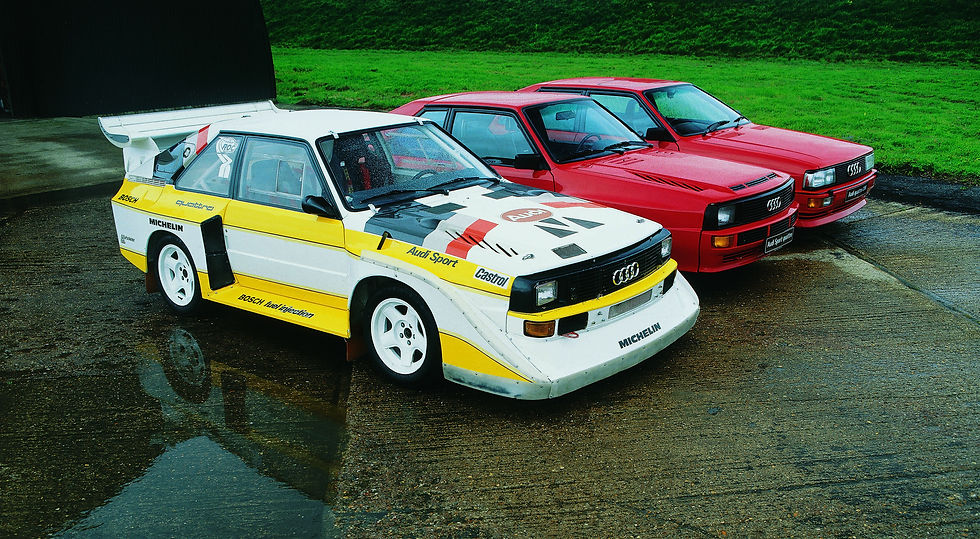
And I think about Steve Bagnall and his understanding that the cars needed an identity beyond the rally stages. That they needed to become part of something bigger. I also think about the extraordinary drivers who brought these machines to life, the mechanics and engineers who kept them running and the photographers, journalists and enthusiasts who helped record their achievements.
I was fortunate enough to be around during those years, camera in hand, witnessing a period of motorsport history that I don’t think any of us fully appreciated at the time. Perhaps that’s the nature of being young and involved in something extraordinary: you are too busy experiencing it to recognise quite how special it is.
With the benefit of hindsight, I realise just how privileged I was to have had that access and to have encountered some of the characters who helped make it happen. The Audi quattro may have become the enduring symbol of that era, but its story was written by people such as David Sutton and Steve Bagnall. This chapter is for them.


Comments