
Ongoing project: my Audi years

For more years than I care to admit I've been trying to put a book together, detailing my time with the Audi Sport UK rally team from 1986-1988. As memories fade, and as key people are sadly no longer with us, that weight of responsibility bears down on me. I was only a teenager back then, but I remember it as if it were yesterday...

I still think of those years as if they were lit by magnesium – bright, fleeting, and just a little dangerous to stand too close to. Memory has a way of softening edges, but not those days. They remain sharp, loud, and unpredictable, like the crack of anti-lag echoing through a forest stage. I arrived as a student, unsure of my footing and still learning how to see, and somehow found myself embedded with Audi Sport UK at a time when rallying felt less like a discipline and more like a kind of orchestrated violence. It was not just about cars or competition – it was about control in the face of chaos, and I was there with a camera that barely felt up to the task.
At that age, I believed photography was about timing and composition, about pressing the shutter at the perfect moment. What I didn’t yet understand was that it was equally about survival – physical, mental, and emotional. You had to survive the environment, the expectations, and, perhaps most unpredictably, the people.
Working alongside Hannu Mikkola was, in many ways, my first lesson in restraint. He carried a quiet authority that didn’t need to announce itself. In a paddock full of noise – engines revving, radios crackling, mechanics shouting over one another – he existed in a kind of calm centre. Watching him prepare to drive the Audi quattro was like observing a ritual. Every movement was deliberate, every adjustment precise. There was no wasted energy.
For a student, it was both reassuring and intimidating. I learned quickly that you didn’t approach him casually, camera already raised, hoping for a moment. You waited. You watched. And if you were lucky, you anticipated correctly. Hannu taught me that stillness could be as powerful as motion, that sometimes the photograph existed before the action even began.
In contrast, Michèle Mouton brought with her an entirely different energy. Where Hannu was composed, she was intense – driven in a way that seemed to electrify the air around her. Her relationship with the Audi Sport quattro was visceral. You could feel it even before the engine turned over. There was urgency in everything she did, a refusal to accept anything less than absolute commitment from the team around her.
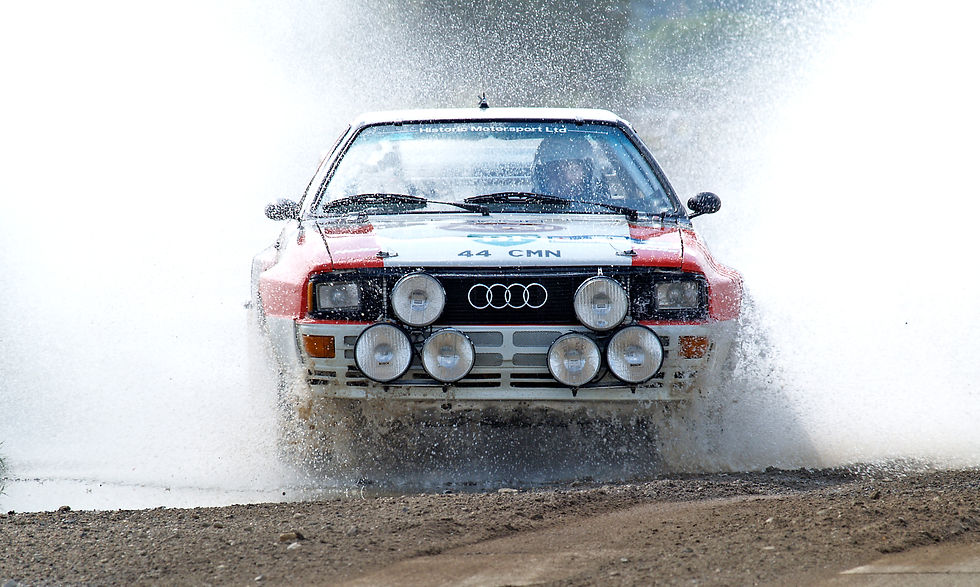
For someone like me, still finding confidence, that intensity could be overwhelming. There were moments when I felt as though I was intruding simply by being present. But over time, I began to understand that what felt like pressure was, in fact, expectation – and expectation, when met, created space. If you proved you could operate within that environment, even quietly, you became part of it.
But the drivers, for all their brilliance, were only one part of a much larger and more complicated ecosystem. Behind them stood team managers, engineers, and mechanics – each with their own pressures, their own ambitions, and, often, their own fragile egos.
The team principals of Steve Bagnall and David Sutton were, in many ways, the most difficult to navigate. They existed in a constant state of tension – caught between corporate expectations, competitive pressure, and the unpredictable nature of rallying itself. Success was demanded, failure was scrutinised, and control was often more illusion than reality. That tension manifested in different ways. Bagnall became hyper-controlling, needing to oversee every detail. Sutton withdrew into a kind of brittle authority, where any perceived misstep was met with disproportionate reaction.
As a student, I was easy to overlook – but also easy to blame. There were times when simply being in the wrong place at the wrong moment, camera in hand, drew sharp criticism. I learned quickly to read moods, to recognise when to step forward and when to disappear entirely. It wasn’t written anywhere, but it was understood: you did not interfere, you did not question, and you certainly did not become part of the problem.
Then there were the cars themselves – magnificent, groundbreaking, and frustratingly unreliable. The mythology of machines like the Audi quattro and Audi Sport quattro often overlooks the reality that they were, in many respects, experimental. They were pushed to extremes, engineered at the edge of possibility, and as a result, they failed. Not occasionally, but regularly.
I remember standing at service areas, watching mechanics swarm around a car that had limped back from a stage, its bodywork scarred, its internals compromised. Time was never on their side. Every second counted, every decision carried weight. And yet, despite the urgency, there was a kind of fragile choreography to their work. Tools moved quickly but with precision. Instructions were shouted, repeated, confirmed. Mistakes were not just costly – they were visible, immediate, and often unforgiving.
The mechanics operated under immense pressure. They were expected to perform near miracles in impossible timeframes, often with incomplete information about what had gone wrong. And when something failed – when a repair didn’t hold, or a component gave way – it wasn’t always the machine that took the blame. Pressure flowed downward. Frustration had to land somewhere.
I saw tempers flare. I saw exhaustion etched into faces that had long since pushed past fatigue. And I saw moments of quiet resilience – mechanics who, despite everything, returned to the task with unwavering focus. They rarely received the recognition afforded to drivers, but without them, nothing moved forward.
For me, all of this unfolded through the fragile lens of film photography. My cameras were not built for this world. They were delicate instruments in an environment that rewarded durability. Dust infiltrated everything, fine and persistent, working its way into mechanisms that demanded precision. Moisture condensed where it shouldn’t. Cold affected performance. Heat warped expectations.
There was no margin for error. Film demanded discipline. You couldn’t shoot endlessly – you had a finite number of frames, and each one mattered. Exposure had to be judged, not corrected. Focus had to be trusted, not reviewed. And when something went wrong, you often didn’t know until much later, when the moment was long gone and irretrievable.
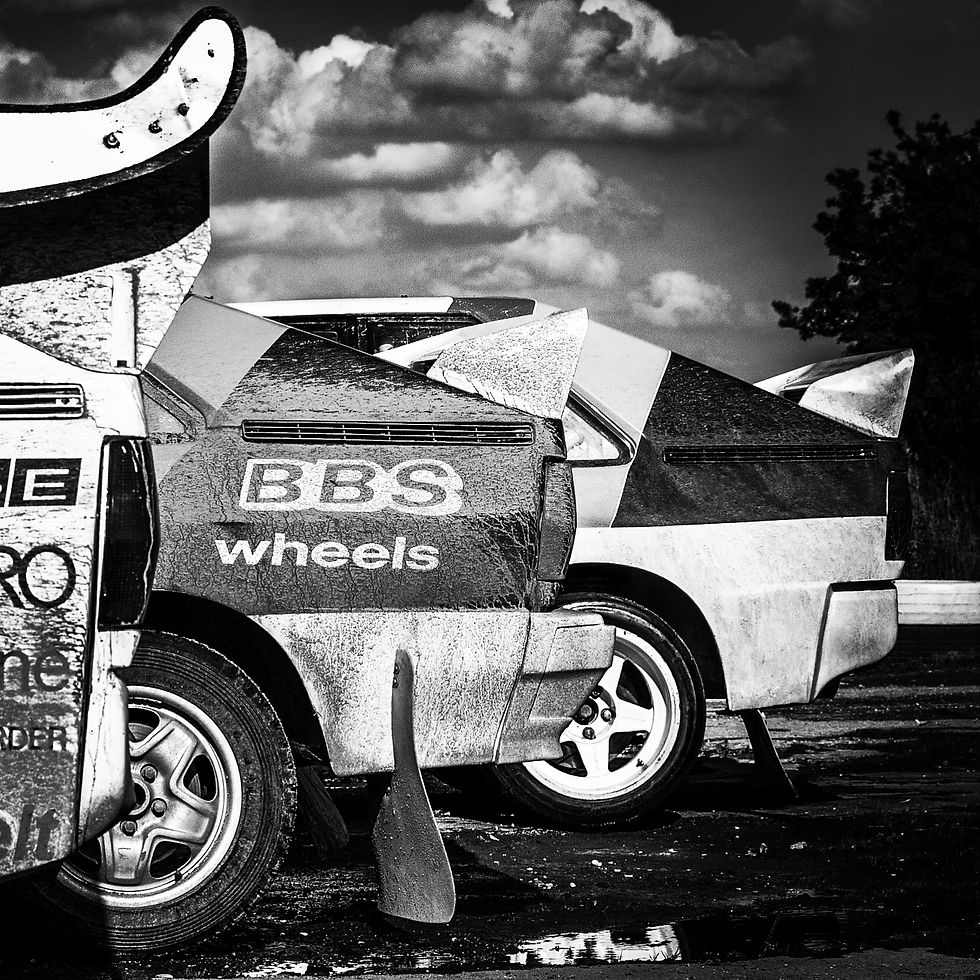
I remember the physicality of it – the weight of equipment, the careful handling of film canisters, the constant awareness that something could be lost through carelessness or chance. A dropped roll, a misloaded camera, a light leak – any of these could erase hours of work.
And yet, in a strange way, those limitations became my foundation. They forced me to think, to anticipate, to engage more deeply with what I was seeing. I couldn’t rely on volume; I had to rely on instinct. I learned to read the road, to understand how a car would approach a corner, how it would behave under different conditions. I learned to position myself not just for safety, but for perspective.
There were moments – rare, fleeting – when everything aligned. The car, the light, the composition, the timing. You pressed the shutter, and something inside you knew that it had worked. Those moments sustained me through all the others – the missed shots, the technical failures, the quiet doubts that crept in when things didn’t go to plan.
And always, there were the people. The personalities that defined the space as much as the machines did. The drivers, the managers, the mechanics – all operating under pressure, all navigating their own challenges. As a student, I existed on the periphery, but I was constantly absorbing, learning not just about photography, but about human behaviour.
I learned that confidence often masked uncertainty. That authority could be both genuine and performative. That brilliance and fragility were not mutually exclusive, but often intertwined. I saw how success could elevate, and how failure could destabilise. And I learned, perhaps most importantly, how to remain steady within that environment.
Looking back now, with the distance of time, I feel an overwhelming sense of gratitude. At the time, it didn’t feel like privilege – it felt like survival. Each day presented new challenges, new uncertainties. But in retrospect, I can see how rare it was to witness that world so closely, to be present during a period that has since become almost mythologised.
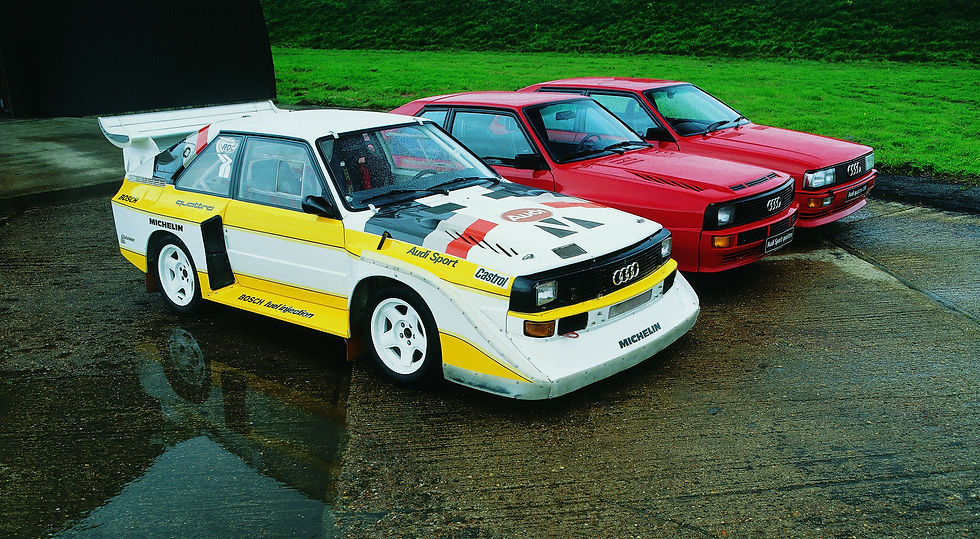
Those years shaped me in ways I couldn’t have understood then. They gave me not just technical skills, but perspective. They taught me patience, resilience, and the importance of observation. They showed me that photography was not just about capturing images, but about understanding context – about recognising the interplay between people, machines, and environment.
Everything I’ve done since carries the imprint of that time. Every decision I make behind a camera, every instinct I trust, traces back to those formative years. The noise, the pressure, the fragile egos, the unreliable machines, the relentless demands – they were not obstacles, but lessons.
And above all, I remain thankful. Thankful that I was there. Thankful that I endured it. And thankful that, through all the chaos, I found not just my craft, but my direction.


Comments